Time to read :
1 min read
Businesses lose millions of hours every year on tasks that follow a pattern. Logging data. Answering the same support questions. Sorting leads. Writing status updates. These are not hard tasks. They are just slow, repetitive, and very human.
AI agents do these things automatically. Not in a vague, future sense. Right now. Real companies are deploying them and seeing results in weeks.
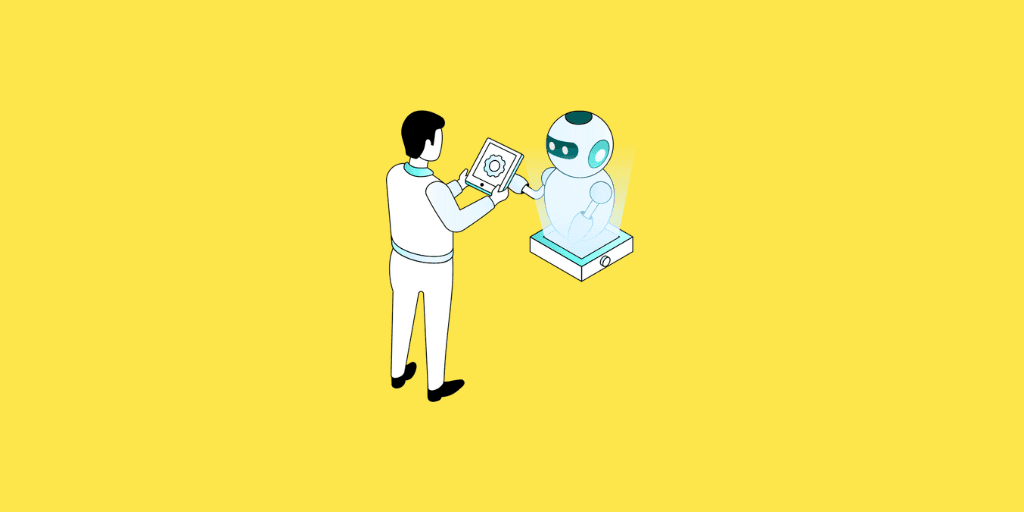
AI agents for business are software systems that can take actions, make decisions, and complete tasks without being told every step. Unlike basic automation, they reason, adapt, and handle complex multi-step workflows.
This post breaks down 7 real examples of how businesses use AI agents today. Each one shows a specific use case, what the agent actually does, and why it matters.
There is also an honest opinion at the end about where AI agents really create value, and where they do not replace humans.
Key Takeaways
✓ AI agents for business are active doers, not passive bots |
✓ They work across sales, HR, finance, support, and operations |
✓ Custom AI agent development gives you full control and fit |
✓ RAG makes agents smart about YOUR company data |
✓ AI workforce automation cuts cost and saves hours every week |
✓ Real companies like Uber, Salesforce, and Dropbox already use them |
✓ You do not need to replace your team. Agents handle the repetitive stuff |
What Is an AI Agent for Business?
An AI agent is a piece of software that can observe a situation, decide what to do, and take action. It uses tools like search, databases, APIs, and language models to complete tasks.
The big difference between an AI agent and a regular bot: agents do not just follow a script. They figure out what needs to happen next.
Think about a customer service bot that only answers from a fixed list. Now think about an agent that reads the customer message, checks the order history, looks up the return policy, and sends a resolution email. That second one is an AI agent.
Most businesses start with simple automation. But when the workflows get complicated, that is when custom AI agent development becomes the better path.
7 Real Business Examples of AI Agents That Work
Example 1: AI Agent for Financial Data Retrieval (Uber)
Uber built a conversational AI agent called Finch. Finance teams used to spend hours manually writing SQL queries to pull reports. Finch removed that entire step.
Now, a finance team member types a question in plain English inside Slack. The agent reads the question, builds the SQL query, pulls the data, and returns a formatted answer. All within seconds.
The system uses multiple agents working together. A supervisor agent routes each question to the right specialist agent. Each specialist handles one job well. Together they do what used to take one person most of their morning.
Result: Finance teams at Uber get data faster and without technical barriers. Anyone who can write a sentence can now query the company database.
This is a classic example of AI business process automation built for an internal team. The agent is not customer facing. It improves the speed and accuracy of internal decisions.
Example 2: AI Agent for Product Catalog Management (Delivery Hero)
Managing a food delivery platform means dealing with thousands of products across hundreds of vendors. Each product needs accurate titles, categories, and attributes. Doing that manually is slow and full of errors.
Delivery Hero built an AI agent system that handles two jobs in sequence. The first agent reads vendor product images and titles, then pulls out 22 attributes like brand, flavor, and volume. The second agent uses that data to generate a clean, standardized product title.
When the system is not confident about an output, it flags it for a human review instead of guessing. That keeps quality high without requiring humans to do all the work.
Result: Thousands of products get accurate data automatically. Human reviewers only see edge cases, not every single item.
This is a good example of examples of autonomous agents working in a multi-step sequence. Each agent has one role. Together they complete a complex workflow.
Example 3: AI Agent for Research and Knowledge Work (Dropbox)
Dropbox built an AI agent system inside their Dash product. When a user asks a question like 'show me the notes from tomorrow's all hands meeting', the agent does not just search. It works through a series of steps.
First it figures out what 'tomorrow' means. Then it finds the right meeting. Then it pulls the associated files. Then it checks its own logic before returning the result. That kind of reasoning is what makes it an agent, not just a search bar.
This is an example of AI workforce automation for knowledge workers. People who spend time hunting through files and folders can now just ask a question.
Result: Knowledge workers at Dropbox spend less time searching and more time doing. The agent handles the retrieval logic automatically.
If your business has a lot of internal documents, reports, or knowledge spread across tools, a RAG-based AI agent can surface the right information on demand. See how Deliverables Agency builds RAG systems for businesses.
Example 4: AI Agent for Customer Support Automation (Intercom)
Intercom built a voice AI agent called Fin Voice for phone support. It handles inbound customer calls, answers questions from the company knowledge base, and escalates to a human agent when the situation needs it.
The system works with a full voice stack. It transcribes the caller's words, processes them through a language model, retrieves relevant answers, converts the response to speech, and sends it back. All of that happens in real time on a live phone call.
What makes this impressive is not the technology. It is the fact that it knows its limits. When a caller has a problem that needs a human, it transfers. It does not try to force an answer.
Result: Support teams handle fewer low-level calls. Customers get faster answers. Agents focus on cases that actually need human judgment.
For businesses that get high volumes of support calls or chat messages, AI agents for customer service can handle the first tier without hiring more staff. This is one of the fastest ROI use cases in AI business process automation.
Example 5: AI Agent for Sales Workflow Automation (Netguru)
Netguru built an internal AI agent called Omega to support their sales team. Sales is one of the most admin-heavy jobs in a business. Call summaries. CRM updates. Proposal writing. Follow-up scheduling. Omega takes a lot of that off the plate.
The agent system has three roles working together. One analyzes the incoming request and decides what to do. One executes the task. One reviews the output and gives feedback. The output goes back into Slack or the CRM automatically.
Omega prepares meeting agendas before calls. It summarizes calls after they happen. It generates feature lists for proposals. It tracks deal momentum so nothing falls through the cracks.
Result: Salespeople spend more time selling and less time updating systems. The agent handles the administrative layer of the sales process.
This is exactly what a custom AI agent development project looks like for a professional services firm. The agent is trained on the company process, connected to the tools the team already uses, and built to fit how they work.
Example 6: AI Agent for Data Access Without Code (Salesforce)
Salesforce built an internal Slack agent called Horizon Agent. It does one thing very well: it lets non-technical people ask data questions in plain English and get actual answers back.
A business analyst types a question in Slack. The agent retrieves the relevant business context, enriches the question with metadata, sends it to a language model, and returns the SQL query along with the result and an explanation.
The explanation part is key. Non-technical users do not just get data. They get context around why the data looks the way it does. That builds trust and makes the agent actually useful.
Result: Business teams that used to wait days for a data analyst to pull a report can now get answers in minutes. Decision-making speeds up.
This is a strong example of AI workforce automation for analytics teams. The bottleneck used to be SQL knowledge. The agent removes that bottleneck without removing the analyst.
Example 7: AI Agent for Transaction and Merchant Classification (Ramp)
Ramp is a fintech company. One of their ongoing problems was merchant misclassification. When a transaction comes in with the wrong merchant label, someone from support, finance, or engineering had to manually investigate and fix it. That took hours.
They built an AI agent that can resolve a misclassification in under 10 seconds. The agent uses language models, vector search, and multimodal retrieval to identify the correct merchant and make the fix automatically.
To keep it safe, the agent can only take a set list of approved actions. Post-processing guardrails catch anything that looks like a hallucination before it goes through. The system is fast and careful at the same time.
Result: What used to take hours of human effort now takes seconds. Support, finance, and engineering teams are freed from one of their most repetitive tasks.
This shows that AI agents for business work well even in high-stakes, regulated environments. With the right guardrails, they can handle accuracy-sensitive tasks safely.
The Real Opinion: AI Agents Are Not About Replacing People
Most articles about AI agents talk about efficiency. Faster. Cheaper. Automated.
That framing misses the point. The real value is not speed. It is removing the work that drains people.
Every business has jobs that follow a clear pattern but still land on a human's desk. Logging call notes. Updating CRM fields. Writing routine emails. Pulling the same weekly report. These jobs are not strategic. They are not fulfilling. They are just necessary.
AI agents take those jobs. And when those jobs are gone, the people who used to do them get to focus on things that actually require them. That is where the value comes from.
The companies that will get the most from AI workforce automation are not the ones trying to eliminate headcount. They are the ones trying to make their existing team more capable.
A sales team with an AI agent does not shrink. It closes more deals. A support team with an AI agent does not disappear. It handles harder problems. The businesses that treat AI agents as a tool, not a replacement, are the ones building something real.
What to Think About Before You Build an AI Agent
Not every business problem needs an AI agent. But some problems are perfect for one. Here is how to tell the difference.
Repetition: If a task is done the same way more than 20 times a week, it is a candidate.
Structured input: If the inputs are predictable (forms, emails, queries), an agent can handle them.
Multi-step logic: If the task requires checking one thing, then deciding what to do next, a simple bot will not work but an agent will.
Human delay: If the task creates a bottleneck because it waits on a person, an agent can remove that wait.
Data access: If the task pulls from internal documents or databases, a RAG-based agent is a strong fit.
If you are unsure where to start, Deliverables Agency offers AI development services to help you identify the right use cases, build the agent, and connect it to your existing systems.
Final Thought
Every business has tasks that happen the same way every single day. Those tasks have a cost. They take time. They create delays. They pull attention away from things that actually grow the company.
AI agents for business are not magic. They are just software built to handle those patterns so people do not have to. The seven examples in this post show that the technology is real, it works, and it is already being used by companies across every sector.
If any of these examples look familiar to a problem in your business, that is the starting point. Pick one workflow. Map it out. Then talk to a team that can build it.
Deliverables Agency builds custom AI agents and automation systems for growing businesses. From generative AI development to full AI workforce automation, the team builds solutions that fit your process, not the other way around.
Turn Your Workflow Into an AI Agent
Deliverables Agency helps you identify high-impact use cases and build AI agents that handle repetitive work with precision. From idea to deployment, we design systems that actually fit your business.
Some Topic Insights:
What is the difference between an AI agent and a chatbot?
A chatbot follows a fixed script. It can answer questions it has been programmed for. An AI agent can think through a multi-step task, use tools, check data, and take action. A chatbot is reactive. An AI agent is proactive. The key difference is that agents can decide what to do next, not just respond to what was said.