Time to read :
1 min read
Planning to build on-demand medicine delivery apps? You already know this is the era of high-compliance pharmaceutical logistics. The traditional trip to the pharmacy is becoming a relic of the past, as the U.S. online pharmacy market prepares to surpass $146 billion by the end of this year.
But here's the reality that most generic top 10 lists won't tell you: the barrier to entry has moved. We are no longer just building delivery apps; we are building traceability engines. With the Drug Supply Chain Security Act (DSCSA) reaching its full, mandatory interoperability phase, every Dispenser (your app's backend) must now prove the pedigree of a pill down to the individual serial number.
For the modern health-tech business, on-demand delivery is the final link in a chain that begins with AI-driven inventory forecasting and ends with cold-chain verified last-mile fulfillment.
Whether you are looking to benchmark against giants like CVS or planning to disrupt the space with a custom-built solution, we help you understand the tech stacks behind these leaders. Let's find out more here:
Key Takeaways
Compliance as Value: DSCSA mandates create a unit-level tracking "moat" that ensures long-term regulatory safety and high investor valuation.
Inventory Model Advantage: Owning your supply chain provides superior cold-chain control and significantly higher profit margins than third-party marketplace models.
Mandatory Interoperability: Utilizing HL7 FHIR standards is essential for seamless e-prescription data flow between doctors, pharmacies, and your mobile platform.
Custom Build ROI: Bespoke development eliminates recurring licensing fees and technical debt, ensuring your platform scales without limits.
Predictive Care Future: Success beyond 2027 relies on AI-driven anticipatory refills and wearable integration to move from reactive to proactive health.
Why Are On-Demand Medicine Delivery Apps Going Popular in 2026?
It is the primary infrastructure for modern patient care. Here is why this sector is currently exploding and how businesses are capitalizing on the surge.
The Telehealth-to-Doorstep Ecosystem
The days of Consult and Commute are over. The integration between virtual care and physical fulfillment is seamless.
Instant e-Prescriptions: The U.S. online pharmacy market will gain popularity by year’s end. This is largely driven by doctors sending scripts directly to the app during a video call.
Closed-Loop Fulfillment: Apps are no longer just delivery services. They are the final step in a digital diagnostic loop. By the time a patient ends their Zoom call, the delivery courier is already at the warehouse.
The Rise of Cold-Chain Precision Logistics
A major reason for the popularity surge is the tech's ability to handle specialty drugs.
IoT Monitoring: We aren't just delivering Tylenol anymore. Modern apps use IoT-enabled smart bags to deliver insulin, biologics, and vaccines.
Temperature Transparency: Patients can check a Thermal Log on their phone to verify that their medication stayed between $2°C$ and $8°C$ throughout the entire transit. This technical reliability has built a level of trust that traditional retail pharmacies struggle to match.
AI-Powered Adherence & Predictive Health
The most successful apps act more like health assistants than vending machines.
Predictive Refills: Using Machine Learning, these platforms analyze a patient's usage rate and local pharmacy inventory to trigger a refill before the patient even realizes they are low on pills.
Clinical Safety Checks: Advanced AI algorithms now cross-reference a user's entire medication history to flag potential drug-to-drug interactions instantly (a feature that reduces administrative errors by up to 40%).
Hyper-Local Micro-Fulfillment Robotics
The logistics model has shifted from massive centralized warehouses to urban micro-fulfillment centers.
30-Second Processing: Companies like NowRx are using robotics to sort, bottle, and label prescriptions in under 30 seconds.
The Uber-ization of Speed: On-demand doesn't mean next day. It means under 60 minutes. By placing robotic hubs in the centers of high-density cities, these apps are outperforming neighbourhood pharmacies on both speed and accuracy.
Whether you need an IoT-integrated delivery platform or an AI-driven inventory engine, a reliable team like ours can build the tech that powers the next generation of healthcare.
Top On-Demand Medicine Delivery Apps in the USA
The on-demand medicine delivery market has transitioned from a convenience-based luxury to a fundamental pillar of the U.S. healthcare infrastructure. The industry is currently defined by two major forces: legacy pharmacy giants leveraging their massive physical footprints, and agile, digital-first startups using robotics and AI to redefine speed.
The following on-demand medicine delivery apps represent the pinnacle of this sector, categorized by the specific problems they solve for American patients and providers today.
App Name | Key Feature / Tech Edge |
Capsule Pharmacy | Free Same-Day Delivery with a high-end UI. |
PillPack (Amazon) | Sorted Dose Packaging for complex, multi-med schedules. |
CVS Pharmacy | Express 1–2 Hour Delivery from 9,600+ nodes. |
NowRx | Robotic Micro-Fulfillment hubs (30-sec processing). |
Walgreens | 24/7 AI-Powered Pharmacist Chat and support. |
Rite Aid | BonusCash Rewards and local pickup ecosystem. |
Capsule Pharmacy
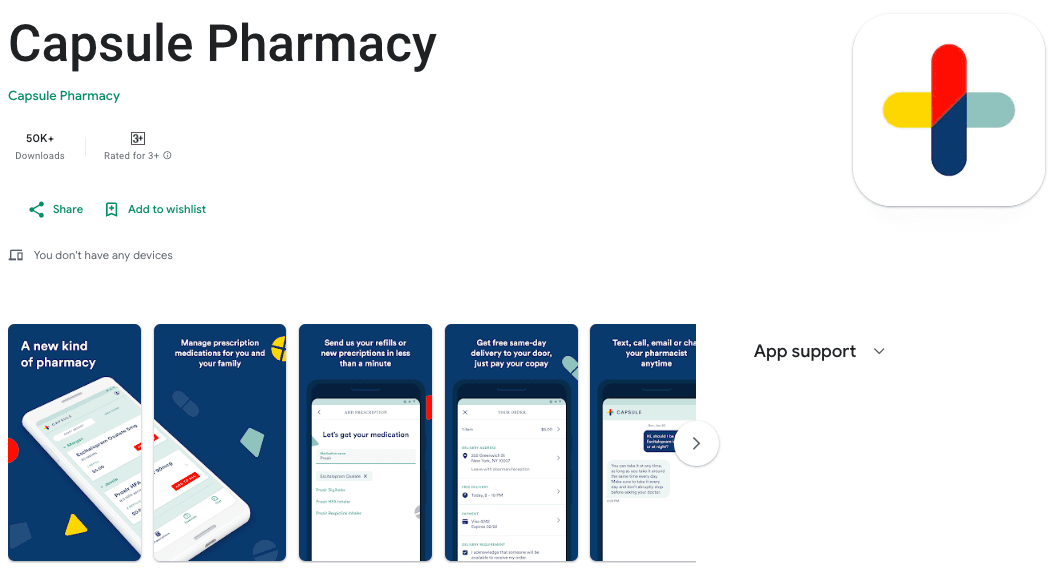
Capsule is one of the best on-demand medicine delivery apps. They focus entirely on a centralized fulfillment system that guarantees same-day delivery without the hidden fees.
The interface is widely considered the gold standard for healthcare UX, stripped of clinical clutter and designed for people who want their health managed with the same ease as a food delivery app.
Same-Day Speed: Free delivery across major US metros, including New York, Austin, and Chicago.
Predictive Stocking: Uses proprietary software to ensure high-demand chronic meds are always on hand.
Insurance Liaison: Their team handles all doctor and insurance coordination behind the scenes to avoid checkout delays.
Secure Messaging: Features a 24/7 private chat with licensed pharmacists directly within the app.
PillPack (Amazon)
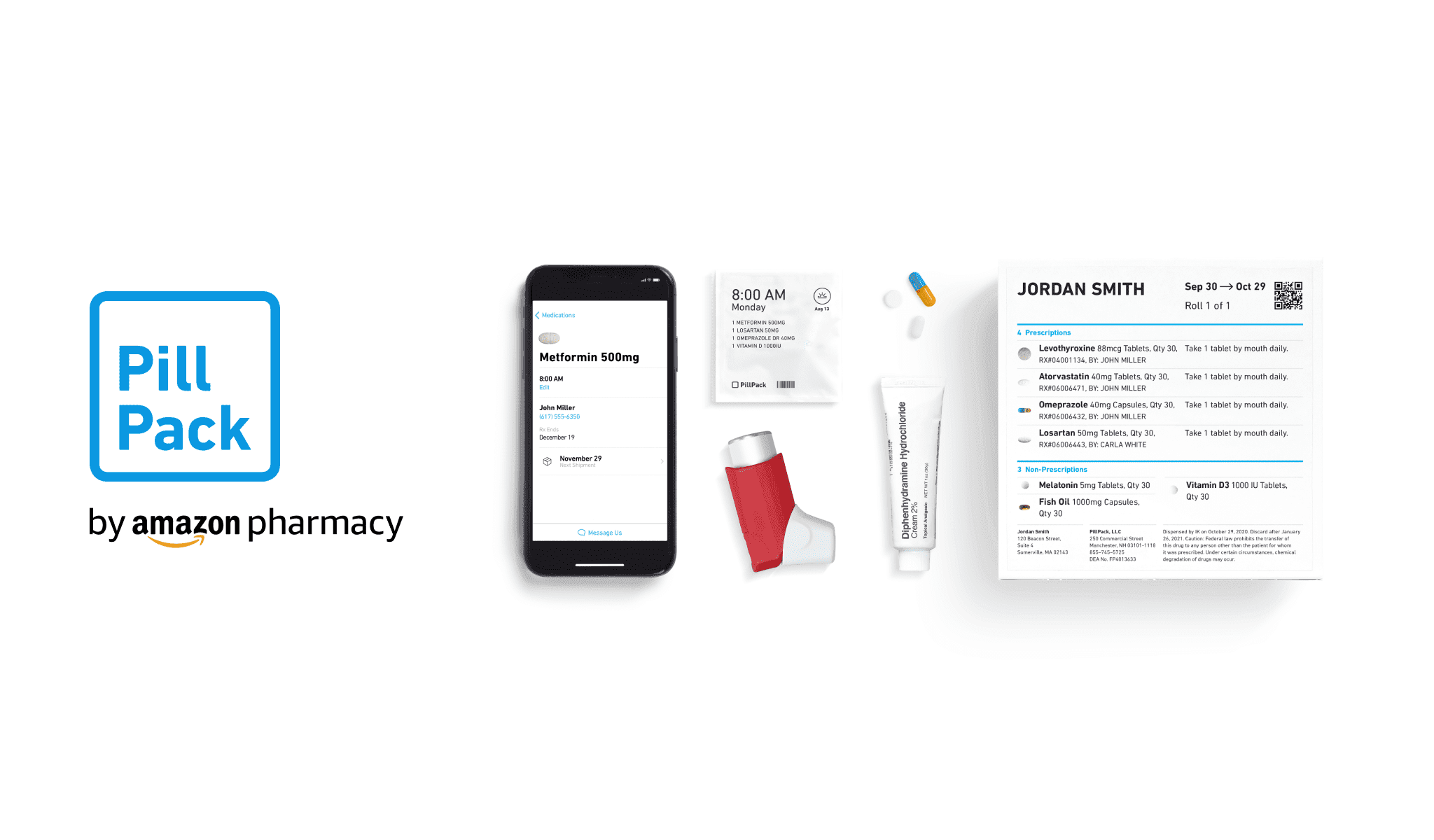
PillPack isn't just an app. It is a full-scale medication management system designed for the millions of Americans juggling multiple daily doses.
They take the mental load out of healthcare by pre-packaging your pills into date-and-time-stamped strips.
Automated Sorting: Personalized packets labeled by day and time to virtually eliminate medication errors.
Prime Rx Savings: Integrated with Amazon Prime, offering up to 80% off on generic medications for members.
PharmacyOS: Runs on a custom-built operating system that synchronizes refills across multiple doctors and health plans.
Comprehensive Shipping: Includes vitamins and OTC supplements in your sorted packets, along with prescriptions.
CVS Pharmacy
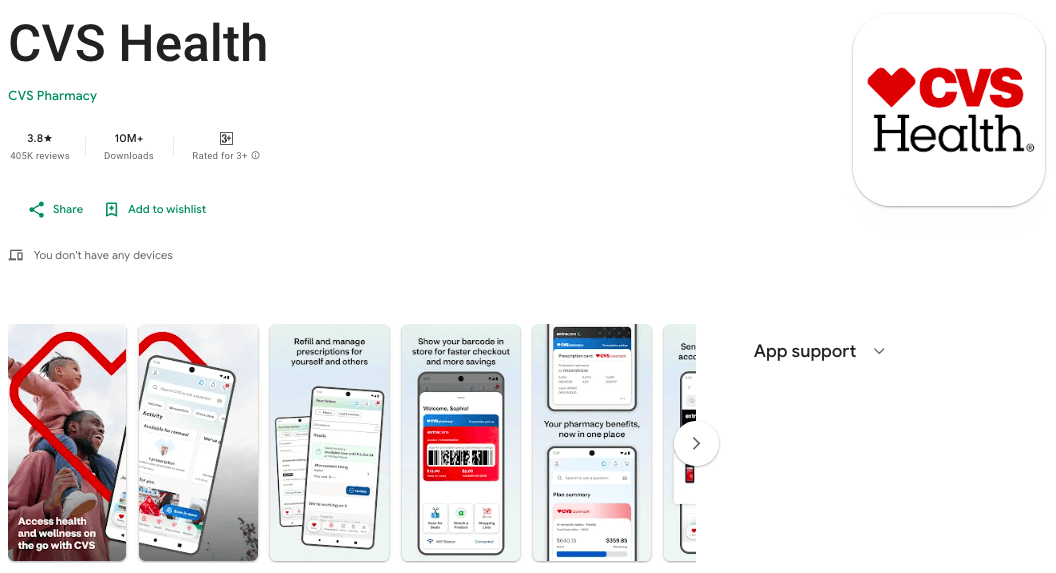
CVS follows an Omnichannel approach. Their app serves as a remote control for your entire health journey, from scheduling a MinuteClinic visit to tracking a 1-hour Express Delivery order.
Hyper-Local Delivery: Utilizes Shipt and local couriers to offer 1–2 hour delivery windows nationwide.
Unified Health Records: Stores your vaccine history, prescription logs, and clinic visits in one secure dashboard.
ExtraCare+ Perks: Provides free shipping and 20% off CVS-brand health products for subscribers.
Family Sync: Allows a single account to manage the complex medical schedules of an entire household.
NowRx
NowRx is the Micro-Fulfillment pioneer disrupting the traditional pharmacy real estate model. Instead of paying for expensive retail corner lots, they operate out of small, highly automated hubs hidden in urban centers.
QuickFill Robotics: Proprietary tech that can receive, bottle, and dispense a prescription in under 30 seconds.
Expedited Tiers: Offers a Rush 1-hour delivery option for urgent medications, such as antibiotics.
Built-in Telehealth: Features a video-chat platform allowing patients to consult a doctor and get a script in one sitting.
Smart Hubs: Operates robotic-driven centers in California and Arizona with plans for nationwide expansion.
Walgreens
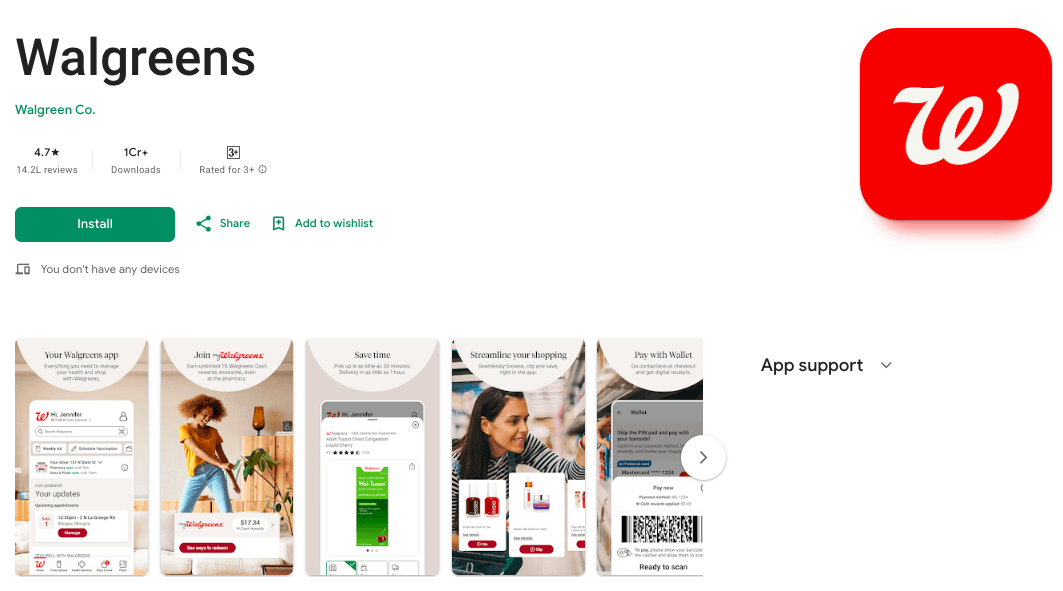
Walgreens has survived the digital pivot by leaning heavily into clinical expertise. Their app isn't just about the transaction; it's about the consultation. With their 24/7 Pharmacy Chat, they provide a human touch that is often missing from purely automated platforms.
24/7 Clinical Support: Instant access to a live pharmacist via secure chat for drug interaction questions.
Photo-to-Rx: Features a high-speed scanner that lets you refill a prescription simply by snapping a photo of the bottle.
Vaccine Hub: The go-to app for scheduling flu, COVID-19, and travel vaccinations for the entire family.
Gig-Economy Scale: Leverages DoorDash and Uber Health to provide nationwide same-day delivery.
Rite Aid
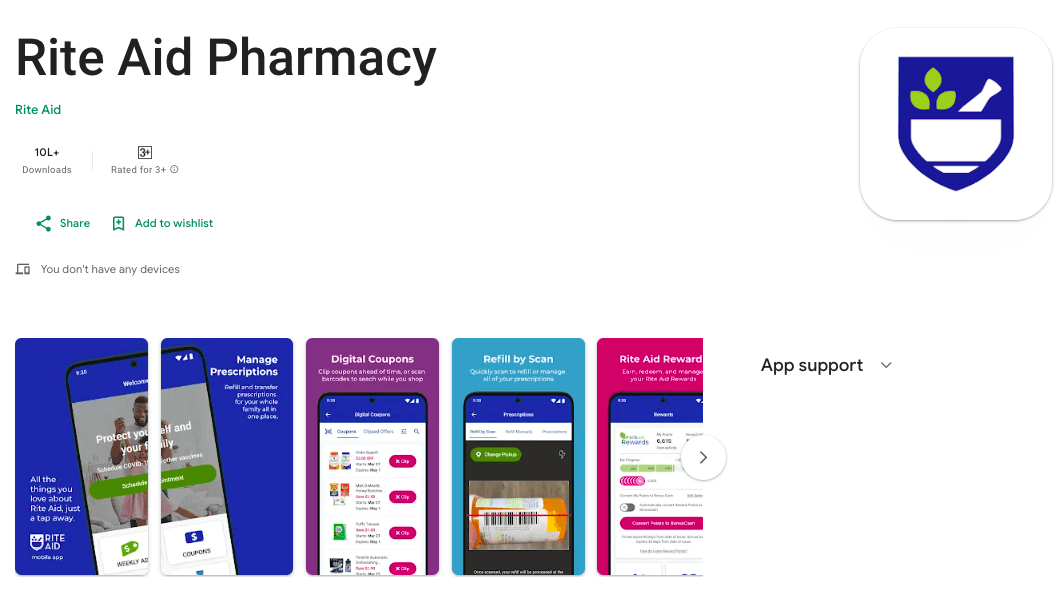
Rite Aid has carved out its niche by becoming the most Reward-Centric pharmacy in the USA. They've turned medication adherence into a loyalty game, where every refill earns you BonusCash that can be spent like real money on your next visit.
BonusCash Rewards: Points earned on prescriptions and OTC items convert directly into store credit.
Simple Transfers: Their One-Tap transfer feature makes it incredibly easy to move your scripts from a competitor.
Barcode Refills: A highly responsive in-app scanner for instant refills without needing to type in Rx numbers.
Digital Coupon Clipping: Allows users to find and clip savings that are automatically applied at checkout or delivery.
The Under-the-Hood Architecture of a Top-Tier App
What should be the architecture of on-demand medicine delivery apps in 2026? Building a market-leading medicine delivery app requires an invisible infrastructure that balances surgical precision with ironclad security. To move from a basic startup to an industry leader, your backend must be more than just a database. It must be a high-speed compliance engine.
Most healthcare development teams focus on a three-tier architecture that connects patients, pharmacists, and logistics in a secure loop.
The Technical Blueprint
A top-tier app is defined by the depth of its integration and the speed of its automation. For co-founders, this under-the-hood reliability is what drives long-term valuation.
Interoperable EHR Layers: HL7 FHIR standards pull e-prescriptions directly from doctor systems. This removes the friction of manual uploads and prevents prescription fraud.
Microservices Backend: By decoupling features (like separating Payments from Inventory Management), we ensure your app doesn't crash during a local flu surge or a high-traffic sales event.
IoT Cold-Chain Tracking: For biologics and insulin, a decent architecture integrates with Bluetooth thermal sensors. It provides patients with a Real-Time Temperature Log, proving their medicine never exceeded $8°C$ during transit.
DSCSA-Ready Traceability: We build unit-level tracking into the ledger, meeting the Drug Supply Chain Security Act mandate for electronic traceability from manufacturer to doorstep.
AI-OCR Verification: Our Computer Vision layer scans insurance cards and handwritten scripts with 99% accuracy, slashing the manual administrative load on pharmacists by half.
Does your current team have a compliance roadmap?
We can perform a Technical Audit of your existing architecture or help you build a HIPAA-compliant MVP from scratch.
Key Features Every Successful Pharmacy App Needs
We know that a successful medicine delivery app is a complex ecosystem where speed meets clinical precision. To rank and retain users, your platform must offer more than a simple shopping cart; it requires a specialized feature set that bridges the gap between digital convenience and strict healthcare compliance.
Features for Patients
For the end-user, the experience should feel like a Health Assistant rather than a vending machine. The goal is to maximize medication adherence while minimizing the friction of traditional pharmacy visits.
Smart e-Prescription Upload: AI-powered OCR (Optical Character Recognition) that instantly reads handwritten or digital scripts for verification.
Predictive Refill Reminders: Automated alerts based on consumption patterns, ensuring patients never run out of chronic medication.
Real-Time Thermal Tracking: A essential that allows patients to see the live temperature log of their meds (like insulin) during transit.
Telehealth Consultation: Built-in video or chat access to licensed pharmacists for instant drug-interaction advice or dosage clarification.
Features for Pharmacist Dashboard
The pharmacist panel is a high-performance workspace designed to reduce administrative burnout and human error. It must synchronize physical inventory with digital requests in real-time.
Integrated Claim Adjudication: Real-time insurance verification and co-pay calculation to prevent billing delays at the point of sale.
DSCSA Compliance Ledger: An automated unit-level tracking system that logs the legal "pedigree" of every bottle dispensed.
Batch Processing & Robotics Sync: Direct API links to on-site micro-fulfillment robots for rapid, automated pill counting and labeling.
Clinical Decision Support: AI flags that alert the pharmacist to potential drug-to-drug interactions or duplicate therapies before fulfillment.
Features for Driver App
The driver is a specialized courier. Their app focuses on route efficiency and maintaining the high-compliance chain of custody.
Dynamic Route Optimization: GPS navigation that accounts for traffic and prioritizes urgent "Rush" deliveries (e.g., antibiotics).
Contactless Proof of Delivery: Secure, timestamped confirmation via photo or digital signature to protect against disputes.
IoT Bag Connectivity: A dashboard showing the driver if the temperature-sensitive cargo is approaching a safety threshold.
In-App Support & Safety: Direct, HIPAA-compliant messaging to the pharmacist to handle delivery address or security issues on the fly.
Features for Admin Panel
The admin panel is the Brain of the operation, where co-founders and managers oversee the business health, regulatory audits, and market scaling.
Comprehensive Analytics Suite: Real-time heatmaps of delivery demand, inventory turnover rates, and customer acquisition costs (CAC).
Global User & Pharmacy Management: The ability to onboard, audit, and manage thousands of pharmacy partners and delivery agents from one seat.
Automated Audit Reporting: One-click generation of reports for HIPAA, DEA, or Board of Pharmacy inspections.
Dynamic Pricing & Promotions: A marketing engine to manage discounts, loyalty programs, and seasonal Health Packages across different regions.
Building these features requires a deep understanding of healthcare interoperability. We can help you prioritize these into a Phase 1 MVP to get you to market faster.
Trends to Watch beyond 2027
The following trends are the next frontiers of the digital pharmacy, where biology meets advanced engineering.
1. 3D-Printed Polypills at the Point of Care
By 2028, we expect 3D printing to move from the lab to the local fulfillment center. Instead of patients managing five different bottles, pharmacies will use additive manufacturing to print a single daily Polypill containing all required medications in precise, custom doses. For a business, this drastically reduces labor for pill counting and positions you as a leader in Precision Medicine.
Printing tablets with complex geometries to control exactly when each drug is absorbed in the body.
Reducing the need for massive inventory by printing rare or specific doses only when a script is received.
2. Autonomous Drone & Robot Delivery Swarms
While 2026 saw the rise of trial drone programs, the post-2027 era will see Autonomous Delivery Networks as the standard for urban and rural logistics. Some companies are already proving that 10-minute delivery is possible. Integrating your app with UAV (Unmanned Aerial Vehicle) APIs will be the only way to meet the instant-gratification demands of the next generation.
Drones cut delivery times by up to 70% in congested cities by taking the direct aerial route.
Specialized drones with built-in refrigeration for ultra-fast transport of vaccines and biologics.
3. AI-Driven Anticipatory Refills
The next generation of AI won't wait for a patient to request a refill. By integrating with wearable health data (Apple Watch, continuous glucose monitors), your app will predict a medical need before the patient even feels a symptom. If a user's vitals show an oncoming respiratory issue, the app could proactively suggest a consultation and have the necessary meds en route.
Real-time analysis of heart rate, sleep, and blood oxygen to trigger "pre-emptive" health alerts.
Using regional health data (like a local flu spike) to automatically move inventory to the hubs where it's needed most.
4. Blockchain for Global Drug Traceability
Beyond the current DSCSA mandates, the future of pharmacy lies in decentralized traceability. By using Blockchain ledgers, the pedigree of a drug (from raw chemical sourcing to the patient's hand) becomes transparent. This will be the ultimate defense against the global counterfeit drug market, which is a $200 billion problem.
Automatically releasing payments to suppliers only when the Cold-Chain sensors confirm the drug was handled correctly.
Allowing users to securely share their medication history with new doctors without a central middleman database.
The goal isn't just to build an app for today's market, but to architect a platform that can plug into these 2027 technologies. Our medicine delivery app development company thinks that staying API-first and Data-Ready is the only way to ensure your platform doesn't become obsolete.
Why Build Your Own App?
Building your own pharmacy app is no longer a choice between online and offline; it is a choice between owning your data and renting someone else's audience. For healthcare businesses, the ROI hinges on the fundamental business model you select.
Marketplace Model | Inventory Model |
In this setup, your app acts as a digital intermediary. You don't stock pills; you connect local licensed pharmacies with patients. | You own the supply. Medicines are stocked in your own high-tech micro-fulfillment centers or central warehouses. |
Pro: Lower upfront costs since you don't need to manage physical warehouses. | Pro: Total control over the patient experience, DSCSA compliance, and higher profit margins by cutting out the middleman. |
Con: Less control over Cold-Chain quality and delivery speeds, as you rely on third-party pharmacy staff. | Con: Significant initial investment in pharmaceutical storage and logistics infrastructure. |
While a $500 template might get you live in a week, it often creates a Technical Debt that kills your business during its first regulatory audit. Custom on-demand app development with a reputable agency offers a radically different ROI trajectory:
Infinite Scalability: Off-the-shelf templates often break when you hit 10,000+ concurrent users. Custom builds use a microservices architecture to handle millions of requests without lag.
Zero Licensing Creep: Templates often charge per user or per transaction fees. With a custom build, you own the code, eliminating recurring overhead as you grow.
Regulatory Resilience: Templates rarely support the latest mandates, such as DSCSA unit-level tracking or HL7 FHIR interoperability. We build these features into your core, saving you from expensive future rebuilds.
Direct EHR Integration: Custom on-demand medicine delivery apps can talk directly to hospital systems, a feature that 99% of templates cannot support, but is essential for 2026 market dominance.
Are you ready to stop renting your infrastructure and start building a digital asset? Deliverables Agency can help you decide which model fits your capital strategy.
Wrapping up- Building vs. Buying Your Solution
To wrap up, the decision between building custom on-demand medicine delivery apps and buying a generic one isn't just a technical choice. It is a strategic business move. At Deliverables Agency, we build the digital infrastructure that powers healthcare disruptors. Choosing a custom-built solution with us ensures that your app is not just another delivery tool but a clinical-grade platform.
Considering a custom on-demand medicine delivery platform?
A compliance-first technical assessment can help determine whether a bespoke build or an off-the-shelf solution aligns better with your regulatory and growth goals. Deliverables Agency works with healthcare founders to evaluate, design, and build HIPAA-compliant pharmacy platforms.
Have an Idea for an App or Website?
At Deliverables, we specialize in building custom digital products that solve real-world problems. Tell us your idea, and our expert team will help you craft a plan to build your dream.
Some Topic Insights:
What are on-demand medicine delivery apps?
On-demand medicine delivery apps let users order prescription drugs and healthcare products online and get them delivered to their home, often the same day.
Are online medicine delivery apps legal in the USA?
How do medicine delivery apps verify prescriptions?
What features should a medicine delivery app have in 2026?
Is it better to build a custom medicine delivery app or use a template?